
News & Update
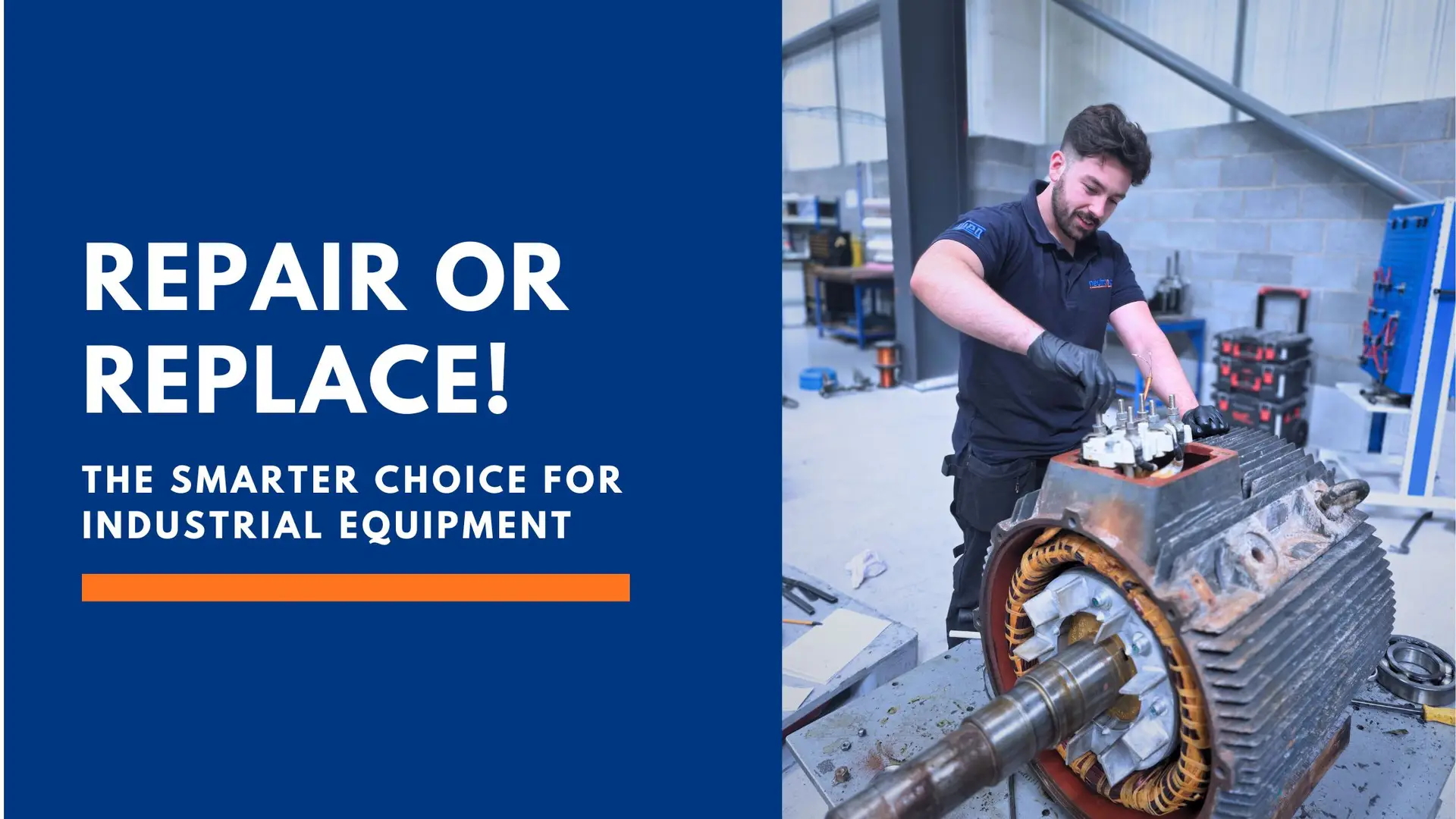
Repair or Replace: The Smarter Choice for Industrial Equipment
Industrial equipment is a major investment for any business. Motors, gearboxes, drives, pumps, and control systems are expected to run
Estimated reading time: 9 minutes
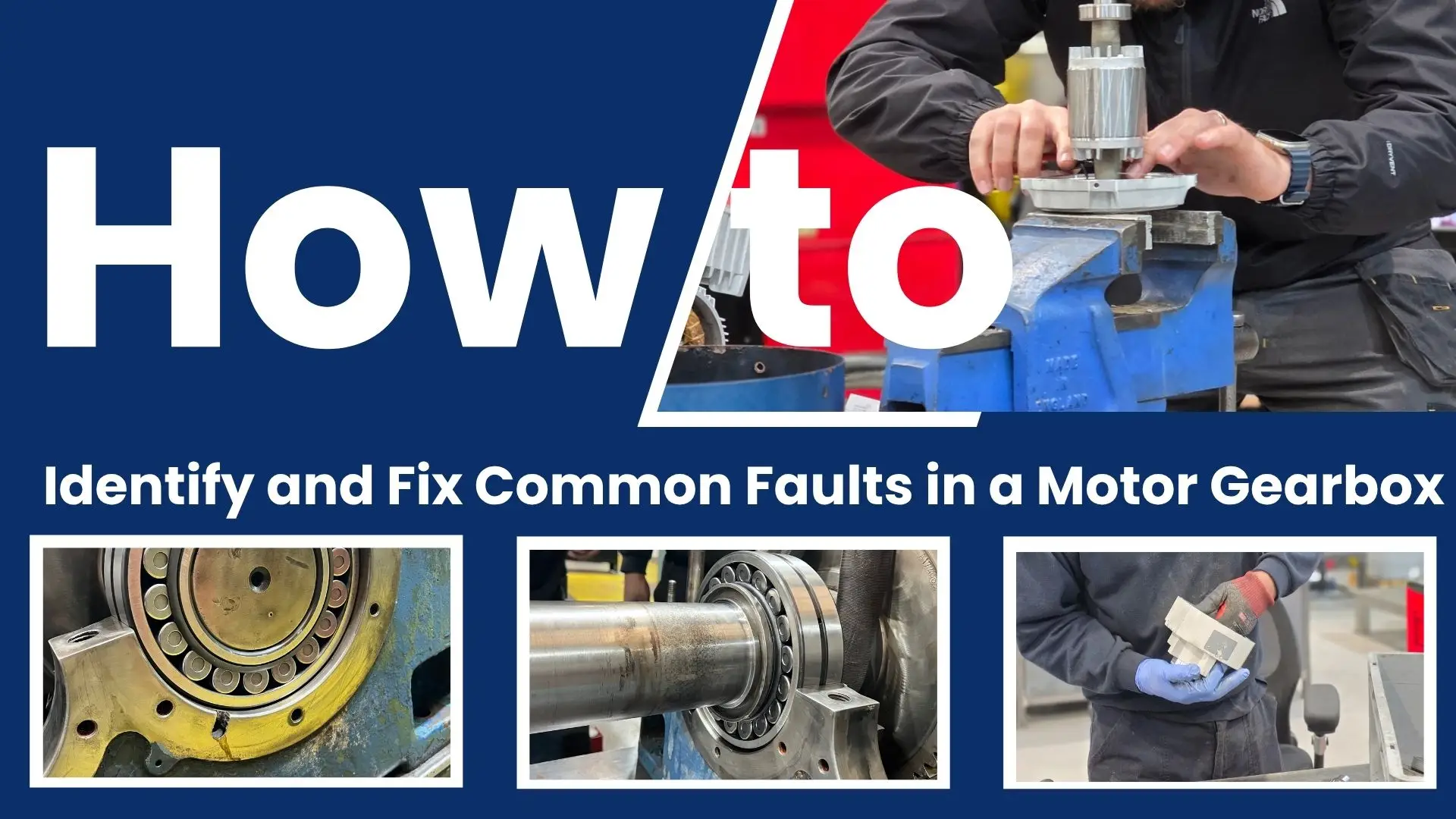
A motor gearbox is an essential part of many industrial systems. It transfers power, controls torque, and helps machinery operate at the required speed. When working correctly, it supports safe, smooth, and efficient production. However, like any mechanical component, a gearbox can develop faults. If these faults go unnoticed or untreated, they can lead to breakdowns, reduced performance, and costly downtime.
Across industries such as food processing, rail, manufacturing, warehousing, energy, and logistics, gearbox performance has a direct impact on productivity. Even a small issue, such as low lubrication or noise, can be a sign of a much bigger internal problem.
In this guide, you will learn how to identify and fix common faults in a motor gearbox, what symptoms to look for, what causes these problems, and how proper maintenance can prevent unexpected failures.
By the end of this article, you will have a clearer understanding of the following:
Whether you are a maintenance engineer, operations manager, or someone responsible for equipment performance, this guide is designed to help you keep your gearbox running efficiently.
A gearbox is designed to operate under heavy load, pressure, and continuous running cycles. Over time, mechanical wear, vibration, temperature fluctuations, contamination, and poor lubrication can affect gearbox components.
Good maintenance helps:
Most gearbox failures begin with minor symptoms that are easy to overlook. A small leak, a mild vibration, or a slight change in sound may not seem urgent, but these early warnings often indicate a developing problem.
When faults are detected early and maintenance is carried out correctly, gearbox lifespan can increase significantly in some cases by several years.
Most gearbox failures are not sudden. Instead, they progress through three key stages:
Understanding these stages helps maintenance teams intervene before faults become severe.
Overheating occurs when the gearbox temperature rises above its standard operating range. A gearbox should run warm, but not excessively hot. High temperatures damage oil, accelerate wear, and shorten the lifespan of gears and bearings.
Common causes include:
Overheating is one of the most common gearbox faults and one of the most dangerous if ignored.
Oil leaks occur when lubrication escapes due to damaged seals, loose fittings, or case damage. Lubrication is critical because it reduces friction and protects gearbox components.
If left untreated, oil leaks often lead to overheating, bearing failure, and gear damage.
Gears inside the gearbox rotate constantly. Over time, friction, stress, and contact pressure cause wear. Severe wear can lead to chipped or broken gear teeth, resulting in a noisy and ineffective gearbox.
Bearings support rotating shafts. When bearings fail, friction increases, which leads to noise, vibration, and reduced efficiency.
Misalignment occurs when the motor and gearbox shafts are not correctly positioned. Even slight misalignment can cause long-term damage.
Contaminants such as dirt, moisture, rust, or metal fragments in the gearbox oil affect lubrication and damage parts.
Noise and vibration often point to an evolving internal issue.
Seals and gaskets prevent oil leaks and block contaminants. Over time, they harden or deteriorate.
Not all gearbox problems originate inside the gearbox. Sometimes, the connected electric motor causes performance issues.
Preventing gearbox failure is far more cost-effective than repairing or replacing damaged units. A proactive and structured maintenance strategy should include scheduled servicing, lubrication management, condition monitoring, and proper installation methods.
Using high-quality oil, monitoring vibration and temperature trends, maintaining a clean environment, and replacing worn parts before they fail are essential steps. Keeping maintenance logs and performance data also helps spot gradual changes that may indicate early-stage failure.
When a gearbox develops a fault, many teams face the question: repair or replace? While replacement may seem like the most lasting solution, in most cases it is more cost-effective and practical to repair or refurbish the existing gearbox, especially when the unit is structurally sound or no longer manufactured.
At Neutronic Technologies, we strongly recommend choosing repair first. Our engineering team can diagnose the exact failure, replace worn components, and refurbish the gearbox back to OEM standard condition. In many cases, once rebuilt and tested, the gearbox performs with reliability equal to and sometimes better than the original installation.
Repair offers several advantages over replacement. First, it avoids long lead times, especially for discontinued, specialist, or customised OEM gearboxes. Replacement also comes with compatibility checks, re-engineering requirements, and additional disruption. By contrast, repairing or rebuilding keeps the existing setup intact, shortens downtime, and protects the investment already made in the system.
Refurbishment from Neutronic often includes complete disassembly, precision inspection under controlled conditions, professional cleaning, surface treatment, bearing and seal replacement, alignment correction, lubrication system refresh, and dynamic testing under load. The result is a gearbox that is restored to like-new performance at a significantly lower cost than purchasing a replacement.
Replacement is typically only needed when the casing is severely damaged, when the gearbox size is no longer appropriate for the machine capacity, or when the cost of repair exceeds the long-term operational benefit. Even in these cases, our team can advise on suitable replacement models and provide a fully supported transition.
Wherever possible, refurbishment is the smarter option and at Neutronic Technologies, we make sure the repaired gearbox leaves our facility operating at its highest performance level, fully tested, documented, and ready for reliable long-term service.
A professional assessment helps ensure the most cost-effective choice.
Knowing how to identify and fix common faults in a motor gearbox helps reduce downtime, extend equipment life, and protect operational productivity. Early signs such as noise, heat, oil leaks, or vibration should never be ignored. With predictive maintenance, proper lubrication management, and condition monitoring, most gearbox faults can be prevented before they result in costly damage.
At Neutronic Technologies, we specialise in industrial gearbox repair, refurbishment, alignment, testing, and reverse engineering. Our team uses advanced diagnostic tools and deep engineering experience to restore gearbox performance to its highest standard. Whether you require reactive repair, ongoing maintenance support, or full gearbox overhaul, we are here to help ensure your equipment runs smoothly and efficiently.
Stay Connected with Neutronic Technologies
Follow us on social media for the latest updates, maintenance tips, and success stories:
Repair or Replace: The Smarter Choice for Industrial Equipment
Industrial equipment is a major investment for any business. Motors, gearboxes, drives, pumps, and control systems are expected to run
Preparing UK Industry for 2026
How to Achieve Zero Downtime with Smarter Maintenance, Repair, and Condition Monitoring As UK industry moves towards 2026, businesses are